Challenges and Limits of Current Genome Sequencing Methods Explained

When I first dipped my toes into genome sequencing during my postdoc, I was struck by a huge disconnect: the gleaming “perfect, complete genomes” promised in papers versus the tangled, frustrating mess of real data. Over years wrestling with Illumina, Nanopore, PacBio, and a slew of projects, I learned one thing for sure—every sequencing method has its quirks and trade-offs that aren’t just academic footnotes. They shape what you can trust and how you set up your experiments.
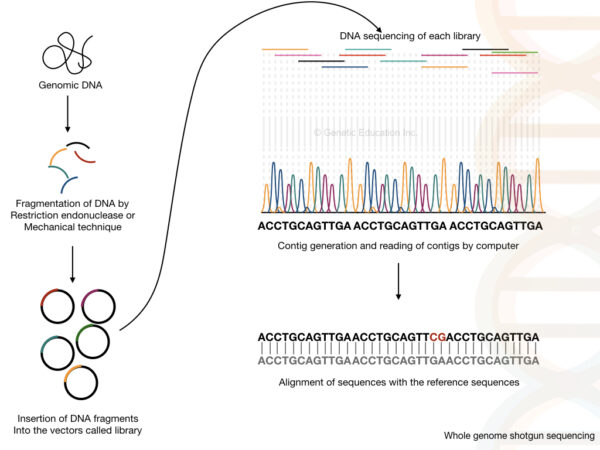
Short Reads: Accurate but Often Frustratingly Limited
Take Illumina’s short reads. Early in a cancer genome project, the team leaned heavily on Illumina’s accuracy (and why not—it’s impressive). But when we zoomed in on complex structural variants—the big deletions, inversions that often fuel tumor evolution—those 150-base reads hit a brick wall. Repetitive regions? Black boxes. Even pushing coverage beyond 60x didn’t help because the reads were just too short to span them. Lesson? No amount of depth fixes complexity if your reads can’t physically cover it.
Long Reads: The Promise and the Pain
Then there’s Oxford Nanopore long reads—super exciting with read lengths sometimes hitting 50,000 bases or more. I tackled a plant genome riddled with repeats and polyploidy using Nanopore. Sounds perfect, right? Well… error rates hovered between 12-15%, mostly pesky indels in homopolymer stretches (you know, those frustrating runs of As or Ts). Downstream variant calling was a nightmare; early SNP calls looked like nonsense. So yeah, long doesn’t always mean better.
Hybrid Assembly: The Middle Ground That Works (Eventually)
What turned things around was hybrid assembly. We combined Illumina’s ultra-accurate short reads with Nanopore’s long scaffolding power using MaSuRCA. Over weeks of trial and error—because nothing here is plug-and-play—the software aligned short reads back onto long-read contigs to polish errors. Indel errors dropped by over 80%, revealing structural variants that had been invisible before. But fair warning: expect multiple rounds of tweaking parameters and rerunning assemblies before it settles down.
If you want some concrete starting points for MaSuRCA parameters:
- Use
GRAPH_KMER_SIZE=63for balancing sensitivity and specificity on plant genomes - Set
NUM_THREADShigh (16 or more) if your CPU allows—it speeds things up dramatically - Enable
POLISHING=yesto activate iterative error correction steps
PacBio CCS: Accuracy at a Price
PacBio’s circular consensus sequencing (CCS) mode raises accuracy by reading the same molecule multiple times—a neat trick that can push raw accuracy above 99%. But—and this is important—it doubles sequencing time per sample and inflates costs considerably. If you’re strapped for cash or racing against deadlines, CCS might sound dreamy but quickly becomes impractical.
Validation: Don’t Skip This Step!
One early career moment sticks out vividly: after knocking out a gene using CRISPR designed from a short-read assembly, cells showed no phenotypic change despite weeks of work and mounting frustration. Targeted Sanger sequencing finally revealed our guide RNA targeted a misannotated exon—a gap in the assembly caused by incomplete coverage at that locus. Moral? Orthogonal validation isn’t optional; it’s essential if you want to avoid chasing ghosts.
Budgeting Realistically
Cost matters—a lot. Illumina NovaSeq runs churn out terabases at roughly $10 per gigabase, but long-read platforms cost about 3–5 times more per base when you factor library prep plus computational overhead. Speaking of which: assembling long-read data demands way more RAM and CPU time—think cluster computing levels most small labs don’t have without partnerships or cloud services.

My advice? If budget or compute power is limited:
- Focus on hybrid strategies targeting key regions with long reads
- Use short reads for whole genomes
- Plan ahead for computational resources; don’t get blindsided
Bioinformatics Tools: Powerful but Demanding
Machine learning tools like DeepVariant and Clair3 are game changers for improving variant calls on noisy long-read data—they cut false positives dramatically (by nearly 40% in one rare disease project I worked on). But setting these pipelines up was no cakewalk; it took weeks of tuning specific to our dataset quirks.
If you’re diving into these tools:
- Start with DeepVariant’s default models but plan multiple test runs adjusting batch sizes (
--max_batches) to avoid memory crashes - Keep an eye on Clair3 updates via GitHub—models improve fast!
- Don’t hesitate to reach out to user forums; their troubleshooting tips saved me countless headaches
Ethical Implications: Handle With Care
Sequencing uncertainties ripple far beyond the bench. I remember a clinical case where ambiguous variant calls from noisy data left clinicians unsure if a patient carried a pathogenic mutation—risking unnecessary anxiety or false reassurance. Transparent communication about these limitations is as crucial as technical accuracy.
Key Takeaways Before You Start Your Next Project
- Define your biological question clearly — Structural variants? SNPs? This shapes your platform choice.
- Pilot early — Test platforms on representative samples before scaling up.
- Embrace hybrid assemblies — Use tools like MaSuRCA or Unicycler but expect iterative tweaking.
- Validate key findings orthogonally — Sanger sequencing or qPCR can save months of headache.
- Stay current with bioinformatics — Follow GitHub repos and preprints for new error correction tools.
- Budget thoroughly — Include sequencing costs and compute resources plus validation assays.
- Engage ethics committees early — Especially when working with human samples; communicate uncertainty openly.
A Quick Decision Cheat Sheet
| Goal | Recommended Approach | Caveats |
|---|---|---|
| Detect SNPs only | Illumina short reads (30–60x) | May miss structural variants |
| Complex structural variants | Hybrid assembly (Illumina + Nanopore/PacBio CCS) | Longer turnaround & higher cost |
| Budget tight & urgent | Illumina + targeted long reads | Limits genome-wide discovery |
| Highest accuracy needed | PacBio CCS | Expensive & slower |
The “perfect genome” remains elusive—a mosaic pieced together carefully through complementary tech and rigorous validation rather than magic bullets.
If you want me to share some actual pipeline config files or parameter sets from recent projects—or swap horror stories—I’m happy to help navigate those tricky waters!
Remember: this field is part science, part art—and sometimes pure stubbornness pays off more than shiny tech alone.
Got questions about any step? Just ask—I’ve definitely been where you are now!


